
Precision Custom Injection Molding for Automotive Parts That Fit and Perform
Nearly every visible plastic component in a modern vehicle originates from custom injection molding automotive processes, where molten thermoplastic is injected under high pressure into precision-engineered steel molds. This method produces complex parts like dashboard panels, bumpers, and interior trim with exact tolerances and repeatability, enabling high-strength, lightweight designs that reduce overall vehicle weight. By engineering custom cavity geometries and material formulations, manufacturers achieve superior impact resistance, surface finish consistency, and thermal stability tailored to specific automotive applications.
Tailored Plastic Part Manufacturing for Vehicle Interiors
Tailored plastic part manufacturing for vehicle interiors achieves superior fit and finish through custom injection molding automotive processes. This method allows precise replication of complex geometries for dashboard components, door panels, and center consoles, using engineered resins that meet strict thermal and UV stability requirements. By controlling mold flow and cooling rates, manufacturers eliminate sink marks and warping, ensuring flush gaps and consistent texture across mating surfaces. Secondary operations like overmolding integrate soft-touch layers directly onto rigid substrates, enhancing tactility without adhesive failure. The approach enables low-volume production with tooling optimized for quick cycle times, delivering interior parts that maintain dimensional accuracy under temperature extremes and resist long-term creep.
Dashboards and Instrument Panel Precision Casting
For custom vehicle interiors, dashboard and instrument panel precision casting ensures intricate gauge clusters and air vent bezels snap-fit without warping. This process uses high-tolerance molds to create class-A surface finishes that resist glare and daily wear. Key details include:

- Gate placement optimized to avoid flow lines on textured surfaces
- Metal insert overmolding for sturdy climate control knobs
- Multi-cavity tooling that keeps both driver and passenger pods identical
- Draft angles designed specifically for easy ejection of deep contoured trim pieces
Door Trim and Center Console Component Fabrication
For door trim and center console component fabrication via custom injection molding, engineers prioritize **ergonomic structural integrity** alongside aesthetic precision. Door panels demand robust, impact-resistant polymers with integrated clip channels for flawless assembly. Center consoles require complex molds for features like cupholders and armrest supports, often using soft-touch overmolding. Both rely on tight tolerances to ensure gap-free fitment with adjacent dash panels, with slide actions enabling undercut geometries for hidden storage compartments.
| Aspect | Door Trim | Center Console |
| Primary Polymer Need | High-impact ABS for crash safety | Glass-filled nylon for load-bearing hinges |
| Key Mold Feature | Sequential valve gating for large panels | Collapsible cores for deep draw cavities |
| Surface Finish | Texture match for door card grain | Gloss control for visible infotainment bezels |
Glove Box Doors and Storage Bin Molding Solutions
For glove box doors and storage bin molding solutions, precision is paramount. Custom injection molding automotive processes deliver robust, warp-resistant structures, utilizing engineered resins like polypropylene and ABS for impact strength. The integration of flush-fit living hinges on glove box doors eliminates hardware, while textured surfaces and soft-touch overmolding on storage bins reduce rattles. Dual-shot molding allows for a single-cycle combination of rigid substrate and tactile TPE layer, preventing squeaks during vehicle motion. Complex geometries, such as contoured bin dividers or dampened glove box doors, are achieved via high-pressure injection, ensuring a seamless blend of durability and aesthetic refinement tailored to specific vehicle models.
Under-the-Hood Bespoke Component Production
Under extreme engine-bay heat and vibration, custom injection molding automotive delivers under-the-hood bespoke component production by tailoring resin formulations—such as glass-filled nylon or PEEK—to specific thermal expansion and chemical resistance needs. An engineer watches as a precision mold cycles a complex air intake duct, its internal geometry designed through iterative flow analysis to avoid stress-risers. The same tooling can produce a unique coolant reservoir bracket, with integrated snap-fits that eliminate secondary fasteners. These bespoke parts emerge ready for immediate assembly, their tailored wall thicknesses and ribbing patterns proven through real-world thermal cycling tests. Every shot is a direct response to the vehicle’s specific layout constraints, not a catalog standard.
Engine Cover and Air Intake Manifold Manufacturing
Engine covers are custom-molded with high-temperature-resistant polymers like glass-filled nylon to withstand under-hood thermal cycling while accommodating acoustic insulation pads. Air intake manifolds, often produced via multi-component gas-assist injection molding, integrate complex internal runners and sealing surfaces within a single tool. Structural foam molding is common for large manifolds to reduce weight without sacrificing burst-pressure ratings. Surface textures and boss geometries are precisely tailored for gasket fitment and hose connections, eliminating porosity typically found in cast alternatives.
Custom injection molding delivers engine covers with integrated NVH features and air intake manifolds with tuned, leak-free ductwork, both optimized for under-hood space and thermal loads.

Fluid Reservoir and Coolant System Part Crafting
Custom injection molding for automotive fluid reservoir and coolant system part crafting demands materials like glass-filled nylon or polypropylene to withstand constant thermal cycling and chemical exposure. Unlike standard molding, these components require precise core-cavity alignment to produce leak-free seals at attachment points, often incorporating integral barbed fittings or threaded inserts during the molding cycle. Wall thickness must be controlled within tight tolerances to prevent stress cracking under pressure, while complex baffle geometries inside reservoirs are formed via sliding actions or lifters. The mold design also accounts for witness lines that could initiate fatigue failure, prioritizing gate placement to minimize weld lines in high-stress areas.
Battery Enclosures and Sensor Housing Customization
Battery enclosures and sensor housings demand precision customization to withstand under-hood thermal and vibrational stress. For battery enclosures, custom injection molding allows integration of cooling channel geometries and high-temperature thermoplastics that safeguard cells from shorts. Sensor housing customization focuses on exact-fit mounting points and material selection (e.g., PEEK or PPS) to maintain signal clarity and chemical resistance. These bespoke parts follow a sequential production process:
- Designing wall thickness and ribbing for structural integrity
- Molding with additives for EMI shielding or thermal dissipation
- Overmolding gaskets or connectors for sealed assemblies.
This approach ensures weatherproof sensor integration directly within the component’s lifecycle.
Lightweight Structural Parts via Specialized Tooling
In custom injection molding for automotive, lightweight structural parts are achieved via specialized tooling that incorporates conformal cooling channels, gas-assist, and multi-cavity designs with thin-wall capability. These tools enable the use of high-flow thermoplastics like long-fiber reinforced polypropylene to replace metal brackets and seat frames, reducing weight by up to 30% while maintaining impact performance. How does tooling geometry affect part strength? By integrating rib patterns and controlled wall thicknesses into the mold, stress distribution is optimized, eliminating weld lines that could cause failure under load. Practical advice: validate tool steel selection (e.g., H13 for glass-filled resins) and gate positioning to prevent sink marks in load-bearing zones.

Bracket and Mounting System Prototyping
For custom injection molding automotive, bracket and mounting system prototyping accelerates validation of fit and structural integrity under real-world loads. Rapid tooling produces prototype brackets in engineering-grade resins, allowing immediate testing of vibration resistance and thermal expansion. This eliminates guesswork before committing to production tooling. Rapid bracket iteration reduces redesign cycles by enabling on-the-fly geometry adjustments, ensuring the final mount system withstands dynamic automotive stresses without added weight. How does prototyping bracket geometry improve lightweighting outcomes? It allows engineers to test ribbed or honeycomb structures for strength-to-weight ratio, directly converging on the lightest viable design before hard tooling begins.
Fender and Bumper Reinforcement Insert Creation
Creating fender and bumper reinforcement inserts via custom injection molding replaces heavy metal stampings with precision-engineered polymer cores. The tooling uses gas-assist channels to form hollow, ribbed structures that maintain crash energy absorption while shaving mass. Inserts integrate snap-fit geometry for direct assembly into fascias, eliminating secondary welding. This process yields inserts that are 40% lighter than steel counterparts, with design flexibility for integrated mounting brackets and load-distribution ribs. Tool steel is selectively hardened in impact zones to withstand repeated cyclic stresses during high-volume production.
- Gas-assist molding creates hollow cross-sections for weight reduction without sacrificing rigidity.
- Integrated snap-fit features replace metal fasteners, reducing assembly steps.
- Selective tool hardening in impact zones extends mold life for high-cycle runs.
Chassis Component Weight Reduction Engineering
Chassis Component Weight Reduction Engineering prioritizes topological optimization to remove mass from non-critical load paths within suspension arms and subframes. By integrating finite element analysis with mold flow simulation, engineers design thin-wall geometries reinforced with targeted ribbing. Structural load path refinement enables the use of high-modulus, glass-filled nylon to replace steel brackets while maintaining torsional stiffness. This approach directly reduces unsprung mass, improving vehicle dynamics and fatigue life without compromising crash performance.
- Mold design incorporates conformal cooling channels to prevent warpage in complex, thin-wall chassis brackets
- Material selection focuses on short-fiber reinforced thermoplastics to achieve specific stiffness targets at reduced density
- Multi-cavity tooling balances fill pressure for consistent wall thickness across multiple structural nodes

High-Performance Material Selection for Automotive Use
When choosing high-performance materials for custom injection molding automotive parts, you must balance mechanical strength against thermal resistance. For under-hood components, consider glass-filled nylon or PEEK to handle continuous heat and vibration without warping. UV-stabilized grades are critical for exterior trims to prevent fading and cracking from sun exposure. For interior parts that must resist impact and scratches, ABS or polycarbonate blends work well, though you should verify their mold flow for thin-wall designs. Always match the material’s coefficient of thermal expansion to your assembly structure to avoid gaps or binding in the final vehicle. This targeted selection ensures durable, lightweight results in production.
Glass-Filled Nylon for Heat-Resistant Parts
For heat-resistant parts in custom automotive molding, glass-filled nylon for heat-resistant parts offers a balance of thermal stability and mechanical strength under the hood. The glass fiber reinforcement typically raises the heat deflection temperature to over 250°C, allowing components like intake manifolds and thermostat housings to withstand continuous engine heat. This material resists creep and dimensional shift during long-term exposure to oil and coolant, though mold designers must account for anisotropic shrinkage caused by fiber orientation. Optimal results require gate placement that aligns fibers along stress-bearing axes, and tool steel with 48+ HRC hardness to prevent abrasive wear during high-pressure injection cycles.
Polypropylene Blends for Cost-Effective Production
In custom injection molding for automotive, polypropylene blends for cost-effective production enable high-part counts without sacrificing mechanical integrity. By compounding PP with elastomers or talc, molders achieve impact resistance and dimensional stability at a fraction of the cost of engineering thermoplastics. Selecting the correct filler percentage directly controls shrinkage, preventing warpage in complex geometries like interior trim or under-hood brackets. How do polypropylene blends reduce per-unit costs? They shorten cycle times due to faster crystallization, while the raw material price remains consistently lower than nylon or ABS, making them ideal for high-volume, non-structural automotive components.
TPE Overmolding for Soft-Touch Surfaces
In automotive custom injection molding, TPE Overmolding for Soft-Touch Surfaces delivers tactile, ergonomic interfaces directly onto rigid substrates like ABS or polycarbonate. This process chemically bonds a thermoplastic elastomer layer during the molding cycle, eliminating adhesives and secondary assembly. The result is a durable, slip-resistant grip that resists oils and UV degradation, ideal for steering wheels or console toggles. How does TPE overmolding affect part durability? The elastomeric skin absorbs minor impacts and reduces vibration, extending the lifespan of high-touch automotive components without peeling or delamination.
Complex Geometry and Multi-Material Techniques
The mold cavity’s core shifted during a single shot, forming a cooling channel that curved inside the dashboard bracket – that’s the power of complex geometry in custom injection molding automotive. By using gas-assist or conformal cooling, we eliminate secondary machining. For a tail lamp housing, a two-shot process overmolded a soft-touch TPU seal onto a rigid PC/ABS frame in one cycle, bonding them before the polymer cooled. Q: How does multi-material technique simplify assembly? A: It reduces part count by 40% per subassembly, as a single tool creates a composite lever where living hinges, a glass-filled nylon core, and a rubber grip are fused during the same press cycle. This approach replaces gluing or snapping separate pieces, shaving seconds off cycle time while improving structural integrity at the headlamp adjuster interface.
Two-Shot Molding for Integrated Seals and Grips
For custom automotive injection molding, two-shot molding for integrated seals and grips slashes assembly time by bonding a rigid structural plastic with a soft thermoplastic elastomer in one cycle. This technique creates waterproof gaskets directly onto housings or tactile overmolded handles without secondary clips or adhesives. A common challenge is managing the melt temperature difference between materials to avoid warping the first shot. Material pairing is critical: polypropylene works well with TPV for weather seals, while nylon pairs with silicone for heat-resistant grips. The process also allows selective hard/soft zones on a single part for precise ergonomics or dampening.
Insert Molding with Metal Threads and Contacts
Insert molding with metal threads and contacts enables the direct encapsulation of metallic components during the injection cycle, eliminating secondary assembly for automotive connectors and fastening points. The process precisely positions pre-formed brass or copper inserts within the mold cavity before polymer injection, creating a permanent mechanical bond as the material shrinks around undercuts or knurling. For threaded inserts, this method ensures torque retention without pull-out failure in high-vibration engine bay or interior modules. Contacts, such as pin headers or busbars, are overmolded to achieve sealed, corrosion-resistant interfaces for sensors and control units. A typical sequence includes:
- Loading inserts via robotic pick-and-place into the open mold.
- Clamping and injecting thermoplastic around the metal insert.
- Cooling under controlled pressure to minimize residual stress.
- Ejecting the finished part with integrated conductivity and thread geometry.
This technique reduces part count and eliminates post-molding tapping or soldering steps.
Gas-Assist Molding for Hollow, Lightweight Forms
Gas-assist molding for hollow, lightweight forms injects nitrogen gas into the melt core during automotive custom injection molding, creating voided channels without material shrinkage. This technique reduces part mass by up to 40% while maintaining structural stiffness for components like door handles and air-intake manifolds. The gas pressure holds the plastic against the mold surface, allowing thinner walls without sink marks. Careful gas injection timing and pressure profiling are critical to avoid surface blowout or uneven wall distribution in complex automotive geometries.
| Aspect | Gas-Assist Applied | Standard Injection Molding |
|---|---|---|
| Wall thickness | Variable, down to 1.5 mm | Uniform, ≥ 3 mm |
| Cycle time | Reduced by gas hold pressure | Longer cooling phase |
| Material usage | Hollow core saves 30–40% | Solid fill |
Surface Finish and Aesthetic Customization Strategies
For custom automotive injection molding, surface finish is your primary lever for controlling look and feel. You can achieve a Class A automotive finish straight from the mold using polished steel tooling, eliminating secondary painting for textured interior panels. For a premium, soft-touch aesthetic, specify a textured etch (like MT-11030) to hide fingerprints and minor flow lines while providing grip on dashboards or door handles. A common strategy is combining a high-gloss piano black on trim bezels with a matte, low-gloss texture on surrounding structural parts to create visual contrast. UV-stable additives can be blended directly into the resin to prevent fading, ensuring the customized finish lasts the vehicle’s lifetime.
Textured Mold Surfaces for Non-Slip or Luxury Feel
Textured mold surfaces transform automotive interiors by providing either a non-slip luxury grip or a premium tactile feel. In custom injection molding, engineers adjust surface etch depths and patterns—like fine leather grain or subtle geometric mattes—directly on the tool steel. This process eliminates post-mold coatings, reducing costs while ensuring consistent tactile feedback across gear shifters, door handles, or dash panels. The grip pattern can be localized to high-touch areas, like steering wheel spokes, avoiding visual clutter elsewhere.
Q: How does a textured surface improve daily driving?
A: It gives your fingers a confident, slip-free touch on controls, while making budget-friendly parts feel like premium appointments.
In-Mold Decoration for Logos and Wood Grain Effects
In-mold decoration (IMD) directly integrates logos and wood grain effects into the automotive part during the injection cycle, eliminating post-processing. A pre-printed film carrying the logo or wood pattern is placed in the mold; molten plastic bonds with the film as it forms the component. This process embeds the graphic beneath a protective overlay, ensuring the logo remains resistant to abrasion and UV exposure. The perceived grain depth and tactile feel depend on precise film registration and the resin’s flow characteristics, which must be balanced to avoid pattern distortion. For wood grain effects, this technique allows seamless multi-surface grain continuity across complex dashboard contours, a result unachievable through painting or hydrographics without visible seam lines. The approach directly embeds aesthetic value into the automotive interior’s structural matrix.
Painting and Plating Post-Processing Integration
Integrating painting and plating into a unified post-processing workflow for custom injection molding automotive components ensures a flawless, durable aesthetic. Seamless paint-to-plate adhesion is achieved by precisely sequencing conductive priming before electroplating, eliminating delamination risks common in standard separate processes. This integration allows for bold color coatings over chrome-like finishes on a single part, such as a grille with a painted body and plated accent. Coordinating cure cycles between paint and plate layers prevents blistering and ensures uniform gloss. The result is a reduction in handling defects and rework, delivering show-quality surface durability that outperforms sequential processing.
Production Scalability and Lead Time Optimization
For custom injection molding in automotive, production scalability hinges on modular tooling and rapid mold change systems, which cut downtime between part runs from hours to minutes. To optimize lead times, low-cavitation master molds let you swap inserts without rebuilding the entire tool, allowing fast pivots between prototypes and low-volume production. Scheduling concurrent engineering reviews early with molders can shave weeks off the timeline by catching material flow issues before steel is cut. Pair this with automated real-time monitoring of cooling cycles—it slashes defects and keeps cycle times predictable even when ramping up for urgent replacement parts or niche interior trim.
Rapid Tooling for Low-Volume Prototype Runs
For custom automotive projects, rapid tooling for low-volume prototype runs shrinks lead times by using aluminum or 3D-printed mold inserts, bypassing the multi-week wait for hardened steel. This approach delivers functional parts in days, not months, allowing immediate fit-and-function validation. To execute effectively:
- Select a CNC-machined aluminum mold for up to 2,000 cycles without compromising dimensional accuracy.
- Validate cooling channels early via simulation to prevent warpage in thin-wall polymer components.
- Iterate tool designs directly from prototype test data, reducing rework on production-grade molds.
By targeting geometries identical to final production runs, you de-risk scale-up while keeping per-part costs predictable for sub-1000-unit batches.
Multi-Cavity Mold Design for High-Volume Output
Multi-cavity mold design is the cornerstone of high-volume output in automotive custom injection molding. Each cavity replicates the identical part geometry, enabling a single cycle to produce multiple grilles, housings, or trim pieces simultaneously. Strategic gate placement and runner balancing ensure uniform fill across all cavities, preventing warpage in complex automotive-grade polymers. Cooling channel optimization becomes critical, as disparate cavity temperatures can cause subtle dimensional variations in mating components. This approach drastically compresses per-part cycle time, directly driving scalability for tier-one production runs without sacrificing the tight tolerances required for vehicle assembly.
Family Molding to Produce Multiple Parts Simultaneously
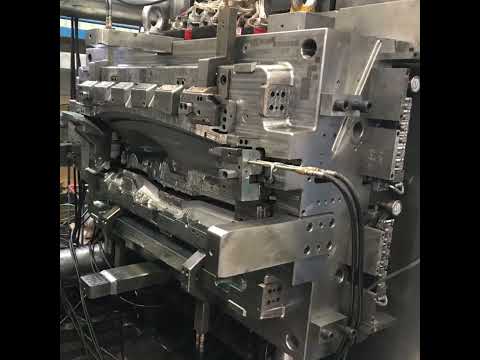
In custom injection molding for automotive, family molding to produce multiple parts simultaneously consolidates several distinct components—such as clips, brackets, or grommets—into a single shot using one multi-cavity tool. This approach drastically reduces cycle counts per part, directly shortening lead times for lower-volume automotive runs. Each cavity shares the same runner system, but part geometries must be volumetrically balanced to prevent short shots or flash. Material compatibility across cavities is non-negotiable, as differing melt flow indices cause yield inconsistencies. Molds require careful gate sizing and venting to maintain uniform fill pressure.
Regulatory Compliance and Quality Assurance Frameworks
On the shop floor, every cavity shot must align with both ISO/TS 16949 and the customer’s PPAP submission. Operators log real-time process data from press parameters, linking each molded part to its melt temperature and hold pressure. If a door handle carcass fails an optical scan, the traceable batch report immediately flags the exact shift and material lot. This QA framework isn’t just paperwork—it rejects nonconformance before a defective assembly reaches the automaker’s just-in-sequence line. Q: How does the framework prevent a recall? A: By enforcing layered SPC checks and first-article inspection, the system captures drift in cavity pressure early, ensuring every interior trim clip meets FMVSS flame-retardant specs without exception.
IATF 16949 Certification and Process Control
IATF 16949 certification mandates that automotive injection molders implement rigorous process control protocols, specifically through the Control Plan for every production run. This requires statistical process control (SPC) on critical dimensions, ensuring dimensional stability across high-volume cycles. Machine parameters must be formally documented and monitored per process failure mode and effects analysis (PFMEA) requirements, with reaction plans for any deviation. Calibration of temperature and pressure sensors follows set intervals, directly linking machine capability indices (Cpk) to the certification’s emphasis on defect prevention, not detection.
Dimensional Verification Using CMM Scanning
Dimensional verification using CMM scanning ensures each custom automotive injection-molded part conforms to CAD tolerances. The coordinate measuring machine generates a dense point cloud, comparing thousands of surface points against the nominal design to detect warpage, sink marks, or shrinkage. First-article inspection relies on this data to validate tooling before production ramp-up. Scan results directly inform corrective actions, such as adjusting mold temperature or pressure profiles.
- Captures complex freeform geometries critical for aerodynamic components
- Generates a color-coded deviation map for immediate visual analysis
- Documents compliance with dimensional report required by OEM quality gate
Material Traceability for Safety-Critical Components
For safety-critical components in custom injection molding automotive, material traceability for safety-critical components demands a robust chain of custody from resin receipt to final shipment. Each lot must be linked to specific molding parameters, machine cycle data, and inspection results via a unique identifier, often using batch-level RFID tags embedded in packaging. This ensures that any quality deviation in braking or steering system parts can be instantly isolated. Without granular traceability, a single contaminated pellet batch risks catastrophic field failures, making digital lot tracking non-negotiable for compliance validation.
| Traceability Element | Safety-Critical Benefit |
|---|---|
| Resin lot mapping | Allows recall of only affected components, not entire production run |
| In-mold sensor data | Correlates pressure/temperature to each part’s material batch |
| Post-mold marking | Enables individual part verification against certified material certificates |
Cost-Efficiency Through Design for Manufacturability
In automotive custom injection molding, Design for Manufacturability slashes unit cost before the first part is even shot. By reducing wall thickness and eliminating unnecessary ribs, we cut cycle times by seconds—savings that multiply across thousands of components. Draft angles and uniform radii prevent costly tool modifications, keeping the mold simple and reliable. Yet a single sharp corner in the geometry can force a steel re-cut, silently eroding the entire margin you engineered. Aligning part geometry with the natural flow of molten polymer avoids sink marks and warpage, so scrap rates stay near zero from prototype to production ramp.
Draft Angle and Wall Thickness Optimization Techniques
In custom injection molding for automotive components, draft angle and wall thickness optimization directly reduces per-part cost by minimizing material use and cycle time. A consistent wall thickness, typically 2–4 mm for automotive applications, prevents sink marks, warpage, and uneven cooling. Draft angles of 1–3 degrees per side ensure clean ejection, reducing scrap from part damage. Simulations verify that uniform thickness and proper taper avoid mold modifications and rework. Thinner walls (2 mm) in non-structural areas lower resin consumption without compromising durability, while thicker sections require increased draft to prevent drag.
Draft angle and wall thickness optimization: balancing material savings with structural integrity to avoid defects and shorten production cycles.
Reducing Cycle Time with Conformal Cooling Channels
In custom injection molding for automotive components, conformal cooling channel design directly reduces cycle time by eliminating uneven heat dissipation. Unlike straight drilled channels, these 3D-printed inserts follow the part’s contour, extracting heat uniformly from complex geometries like ribs or bosses. This uniformity avoids warpage and allows earlier ejection, often shaving 30–50% off cooling phases. For thick-wall automotive brackets or lamp housings, this translates to a tighter production cadence without sacrificing dimensional stability.
Supplier Collaboration for Upfront Value Engineering
In custom injection molding for automotive, supplier-led upfront value engineering transforms cost efficiency by embedding the molder’s practical tooling and material expertise directly into the part’s early geometry and wall-stock decisions. Rather than sending finalized CAD files for quotes, you share functional requirements and target volumes so the supplier can suggest draft angles that reduce cycle time or recommend glass-filled polymers that eliminate secondary rib supports. This joint layout phase catches expensive mold complexity—like tight shutoffs or deep cores—before a single steel chip is cut.
- Align gate location with your aesthetic surface requirements to minimize weld lines and post-mold finishing.
- Convert multi-piece assemblies into single-shot living hinges or snap-fits, slashing downstream labor costs.
- Validate resin shrinkage properties together to preempt warpage surprises in thin-wall panels.
Emerging Trends in Vehicle Plastic Part Fabrication
Emerging trends in vehicle plastic part fabrication for custom injection molding automotive focus on enhancing part performance and production efficiency. One key trend is the use of high-performance polymer blends, such as PPA and PEEK compounds, to replace metal in under-hood components, offering weight reduction and thermal resistance. Another trend involves the adoption of in-mold assembly for multi-material parts, enabling the direct overmolding of sealing gaskets onto rigid housings. Q: How do emerging trends affect tooling durability? A: They drive the use of advanced surface treatments like DLC coatings for molds, increasing lifespan by up to 50% when processing abrasive glass-filled nylons. Additionally, microcellular foaming processes (e.g., MuCell) are being refined for automotive interior panels, reducing sink marks and warpage in large, thin-wall custom molds.
Electric Vehicle Battery Component Specialization
For custom injection molding in the automotive space, electric vehicle battery component specialization is a game-changer. Molds are now tailored to produce high-precision cell holders, thermal management plates, and flame-retardant enclosures that deliver both safety and thermal balance. Every part is engineered to withstand constant vibration and high-voltage environments without compromising structural integrity. This requires specialized resin formulations and tight tolerance tooling. The focus stays strictly on optimizing the battery pack’s internal layout and cooling performance, ensuring each piece fits seamlessly into the larger assembly.
- Cell spacers designed for consistent air or liquid coolant flow between battery cells
- Busbar housings that insulate high-voltage connections while managing heat dissipation
- Vent channels molded into battery covers to release gas safely during thermal events
Biodegradable Polymers for Sustainable Automotive Design
In biodegradable polymers for sustainable automotive design, custom injection molding processes address interior trim and under-hood components with controlled degradation profiles. Material selection prioritizes polylactic acid (PLA) or polyhydroxyalkanoates (PHA) for their engineered end-of-life behavior, though mechanical reinforcement via natural fibers is essential for load-bearing parts. Molding parameters must be precisely adjusted to avoid thermal degradation while maintaining dimensional stability.
- Drying bio-resins to below 0.01% moisture prevents hydrolysis during melt processing.
- Lowering barrel temperatures by 10–15°C reduces chain scission in shear zones.
- Incorporating UV-stabilized masterbatches extends service life without compromising biodegradability.
Part geometry is designed with draft angles adjusted for polymer shrinkage rates, ensuring reliable ejection without cracking.
Smart Parts with Integrated Sensors via Insert Molding
Insert molding in custom automotive fabrication now embeds sensors directly into plastic panels during the molding cycle, creating intelligent structural components FOX MOLD plastic injection mold manufacturer that sense pressure, temperature, or proximity. This eliminates post-molding assembly steps and wiring harness vulnerabilities. The integrated sensor becomes a seamless part of the part, enabling real-time data collection for adaptive lighting, touch-sensitive surfaces, or collision detection without external modules. This process reduces part count and failure points while ensuring the sensor is fully protected from environmental contaminants.
- Seals sensors permanently within the plastic matrix for waterproof, vibration-resistant operation.
- Enables capacitive touch interfaces embedded into door handles or dashboard trim.
- Allows direct overmolding of pressure sensors into seating or bumper structures.
